
Navigating the world of online betting can feel like walking through a legal minefield. Is that wager you’re about to place legal? The answer, unfortunately, isn’t always straightforward. What’s perfectly acceptable in one country could land you in hot water in another. The global reach of online betting is undeniable, with countless platforms vying for your attention. But as its popularity explodes, so does the patchwork of regulations governing it.
With an increasing number of countries now establishing frameworks for online gambling, understanding the specific laws inyour* location is more critical than ever. This article cuts through the confusion, offering a clear overview of the international legal landscape and providing actionable advice to help you bet safely and legally.
Understanding Key Legal Concepts
Navigating the world of online gambling requires understanding specific legal terms. Here’s a breakdown of essential concepts:
- Jurisdiction: This refers to the geographical area or political entity where a particular set of laws has authority. In online gambling, a website’s jurisdiction is where it’s legally based, which dictates the laws it must follow.
- Regulation: This involves the rules, laws, and oversight mechanisms implemented by a governing body to control and supervise online gambling activities. Regulations ensure fairness, prevent fraud, and protect consumers.
- Licensing: The process by which a regulatory body grants permission to an online gambling operator to legally offer its services. A license signifies that the operator has met specific standards and is subject to ongoing scrutiny.
- Offshore Gambling: This refers to online gambling operations that are located and licensed in a country different from where the player resides. These operators are subject to the laws of their licensing jurisdiction, which may differ significantly.
- Online Casino: A website or platform that offers traditional casino games, such as slots, poker, blackjack and roulette, over the internet. They operate under specific licenses and regulations.
Global Overview: A Continent-by-Continent Breakdown
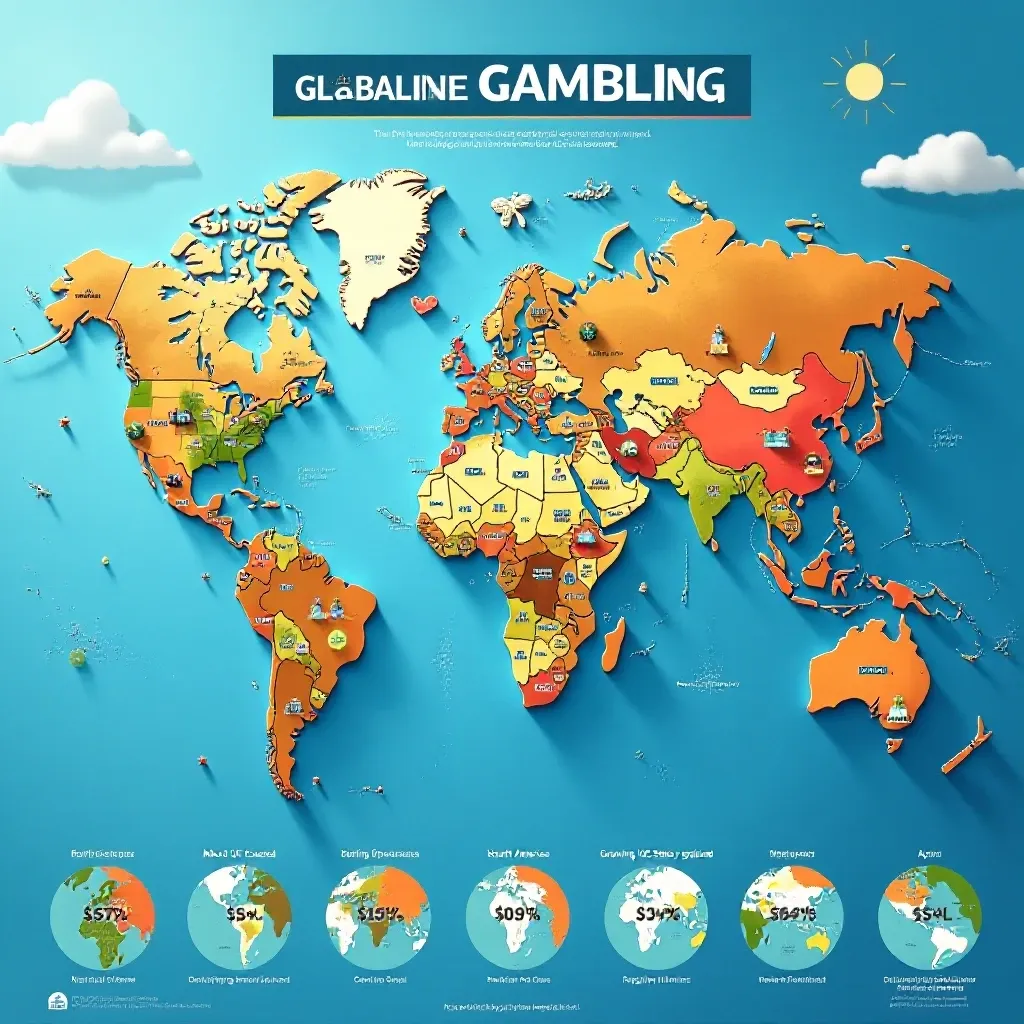
Navigating the world of online betting legality can feel like traversing a minefield. Regulations are incredibly diverse, shifting from country to country and sometimes even within regions. This section provides a high-level overview, highlighting the major trends and variations in online gambling laws across different continents. From the relatively open markets of Europe to the heavily restricted landscapes of Asia, understanding these continental nuances is crucial for anyone interested in the global online betting scene.
Europe
Europe generally exhibits a more liberal approach to online gambling. The European Union pushes for standardized regulations, yet individual countries retain significant control. While some nations embrace online betting with comprehensive licensing frameworks, others maintain stricter controls. The UK Gambling Commission, for example, is one of the most respected regulatory bodies, setting high standards for operators. However, variations in tax policies and specific game restrictions still create a fragmented landscape across the continent.
North America
North America presents something of a mixed bag. The United States, after a long period of prohibition, is seeing a gradual shift towards legalized online betting, state by state. Regulations vary significantly, with some states offering a wide range of online gambling options and others remaining staunchly opposed. Canada also has a complex system, with gambling laws primarily managed at the provincial level. This results in considerable differences in what is permitted across the country.
South America
South America is experiencing rapid growth in its online betting market. Brazil, in particular, has made significant strides towards regulation, opening up potentially lucrative opportunities for operators. Argentina also has a developing regulatory framework, though with variations between provinces. While progress is being made, challenges remain, including concerns about responsible gambling and combating illegal operations. The regulatory landscape is still evolving, making it a dynamic region to watch.
Africa
Africa’s online gambling market is characterized by its diverse regulatory approaches and burgeoning mobile penetration. While some countries, such as Nigeria and Kenya, have established regulatory frameworks for online betting, many others operate with little to no oversight. This creates both opportunities and risks for operators and consumers alike. The growth of mobile technology is fueling the expansion of online betting across the continent, but the lack of consistent regulation poses ongoing challenges.
Asia
Asia generally has the most restrictive stance on online gambling. China maintains a strict prohibition, with severe penalties for those involved in online betting activities. India’s situation is complex, with some states allowing certain forms of online gambling while others prohibit it entirely. Other countries in the region have varying degrees of restrictions, making Asia the most challenging continent to navigate in terms of online betting legality. The focus is often on preventing capital flight and addressing social concerns related to gambling.
Country-Specific Case Studies
Country 1: Example (United Kingdom)
The United Kingdom boasts one of the most mature and regulated online betting markets globally. The cornerstone of its framework is the Gambling Act 2005, which established the UK Gambling Commission as the primary regulatory body. This commission is responsible for licensing operators, ensuring fair play, and protecting vulnerable individuals. Recent changes have focused on stricter identity verification processes to prevent underage gambling and enhanced measures to combat money laundering. The impact on operators like William Hill is significant, requiring substantial investment in compliance and technology to adhere to evolving standards. For players, this translates to a safer and more transparent gambling environment, albeit with more stringent checks and limitations.
Country 2: Example (United States of America)
The United States presents a patchwork of online betting regulation, with laws varying significantly from state to state. Following the repeal of the Professional and Amateur Sports Protection Act (PASPA) in 2018, individual states gained the power to legalize online sports betting and casino games. New Jersey, for instance, has emerged as a leading market, with a robust regulatory framework overseen by the New Jersey Division of Gaming Enforcement. Operators like BetMGM must obtain licenses and comply with specific requirements related to responsible gambling and data security. This decentralized approach creates both opportunities and challenges. Operators navigate a complex web of state laws, while players benefit from increased choice but must be aware of the legality of online betting in their specific location.
Country 3: Example (India)
India’s online betting landscape is complex and somewhat ambiguous. There is no central law specifically regulating online gambling activities across the country. The primary legislation, the IT Act 2000, primarily addresses cybercrimes and does not explicitly mention online betting. However, certain states have enacted their own gambling laws, creating a fragmented legal environment. For example, some states prohibit all forms of gambling, while others allow lotteries or horse racing. This lack of clarity has led to a gray area where many offshore online betting operators cater to Indian players. The absence of a comprehensive regulatory framework raises concerns about player protection and the potential for illicit activities. The situation demands a clear, unified approach to online betting regulation to protect both operators and players within the Indian market.
How to Determine the Legality in Your Location
Navigating the world of online betting can be tricky, especially when it comes to understanding its legal status. Laws surrounding online gambling are far from uniform and can differ vastly depending on where you are in the world. To ensure you’re on the right side of the law, here’s a step-by-step guide to determining the legality of online betting in your specific location.
Step 1: Pinpoint Your Precise Location
The first and most crucial step involves identifying your exact location. Don’t just think country; consider your region, state, or province. Gambling laws are frequently legislated at a more granular level than the national level. For instance, what’s perfectly legal in one state might be prohibited in another just across the border. Be specific.
Step 2: Dive Deep into Local Gambling Laws
Once you know your precise location, it’s time to roll up your sleeves and start researching. The goal is to get a crystal-clear understanding of the online gambling laws that apply to you. Start by seeking out official government websites for your region or state. These sites often have sections dedicated to gaming laws, regulatory bodies, and permitted activities. Look for keywords like “gaming commission,” “gambling control board,” or “lottery regulations.” Governmental websites generally provide accurate information on this topic.
Step 3: Sift Through Information Carefully
The internet is awash with information, but not all of it is reliable. Exercise caution and critical thinking when researching online. Prioritize information from official sources and reputable news outlets. Be wary of forum postings or blogs where the author’s credentials and the information’s accuracy can’t be verified. Look for consistency across multiple reliable sources – that’s a good sign you’re on the right track.
Step 4: Know When to Call in the Experts
If, after your research, you’re still unsure about the legal status of online betting in your location, it might be time to consult with an experienced legal professional. Gambling laws can be complex and subject to interpretation, and a lawyer specializing in this area can provide personalized guidance based on your specific circumstances.
Disclaimer: This information is intended for general informational purposes only and does not constitute legal advice. It is essential to conduct your own research and, if necessary, seek professional legal counsel to ensure you comply with all applicable laws and regulations.
The Risks of Illegal Online Betting
Venturing into the realm of illegal online gambling might seem like a harmless thrill, but beneath the surface lurks a sea of potential risks. Engaging in such activities can expose individuals to severe legal, financial, and security-related consequences.
Firstly, the legal ramifications of illegal gambling can be quite harsh. Depending on the jurisdiction, individuals could face hefty fines, ranging from hundreds to thousands of dollars. In more severe cases, imprisonment is a real possibility, particularly for those involved in organizing or facilitating illegal gambling operations. A criminal record resulting from illegal gambling can also impact future opportunities, such as employment and travel.
Financially, the risks are equally significant. Unregulated gambling sites often lack the security measures and fair play protocols of legitimate platforms. This means that users are at a high risk of losing their money due to rigged games or fraudulent practices. There’s also the very real possibility that winnings will simply not be paid out. Since these sites operate outside the law, there is little to no recourse for recovering lost funds.
Furthermore, security risks are a major concern. Illegal gambling sites are notorious for their lax security measures, making them prime targets for cybercriminals. This can lead to data theft, where personal and financial information, such as credit card details and addresses, are stolen and used for identity theft or other malicious purposes. In some instances, individuals have found their accounts drained and their credit scores ruined after using illegal gambling platforms. These platforms often lack proper encryption and security protocols, leaving users vulnerable to various cyber threats. Protecting yourself when using online platforms is very important, reason why you should use legal platforms.

The Future of Online Betting Regulations
The online gambling landscape is in constant flux, driven by technological advancements, evolving consumer behavior, and the ever-present tug-of-war between innovation and regulation. Looking ahead, several key trends are poised to reshape the future of online betting regulations worldwide.
Regulation Trends in a Mobile-First World
Mobile gambling has exploded in popularity, and regulators are scrambling to keep pace. The convenience and accessibility of betting via smartphones and tablets present unique challenges. Expect to see stricter requirements for mobile betting apps, including robust age verification processes, geo-location technology to ensure compliance with jurisdictional rules, and features that promote responsible gambling. The focus will be on creating a safe and fair mobile betting environment for all users.
Emerging Technologies: Blockchain, AI, and the Regulatory Response
New technologies like blockchain and artificial intelligence (AI) are set to revolutionize the online betting industry, but they also pose new regulatory dilemmas. Blockchain’s potential to enhance transparency and security could lead to its use in verifying bets and ensuring fair payouts. AI algorithms can be used to detect fraudulent activities and identify problem gamblers. However, regulators must grapple with issues like data privacy and the potential for algorithmic bias. The challenge will be to harness the benefits of these technologies while mitigating their risks.
Cryptocurrency’s Role in Online Betting
The use of cryptocurrencies in online betting is a hot topic. While offering anonymity and faster transactions, cryptocurrencies also raise concerns about money laundering and the lack of oversight. Regulators are likely to adopt a cautious approach, potentially imposing stricter KYC (Know Your Customer) and AML (Anti-Money Laundering) requirements for crypto-based gambling platforms. The future may see a clearer legal framework for cryptocurrency gambling, aiming to strike a balance between innovation and security.
Emerging Markets and Evolving Legal Landscapes
Emerging markets represent a significant growth opportunity for the online betting industry. As these markets develop, their legal landscapes are also evolving. Some countries may choose to legalize and regulate online gambling to generate tax revenue and protect consumers. Others may maintain a stricter prohibitionist stance. The key will be for operators to adapt to the specific regulatory requirements of each market, ensuring compliance and promoting responsible gambling practices. Standardization of regulations across different jurisdictions remains a distant prospect, but increased cooperation and information sharing between regulators could lead to greater consistency in the long run.
Conclusion
Navigating the world of online betting requires a blend of excitement and caution. The key takeaway is that informed decisions, coupled with responsible gambling habits, are paramount. Understanding and adhering to local laws is not just a suggestion; it’s a necessity to ensure a safe and legal online betting experience.
Responsible gambling means betting within your means, recognizing the risks involved, and being aware of the potential for addiction. If you or someone you know is developing a gambling problem, seeking help is a sign of strength, not weakness. Numerous resources are available to provide support and guidance.
The online betting landscape is constantly evolving, with regulations changing frequently. Staying informed about these shifts is crucial for maintaining compliance and enjoying online betting without legal repercussions. Embrace the thrill, but always prioritize online safety and responsible behavior.