
Ever wondered why some slot players seem to have all the luck? Is it just chance, or is there a hidden key to unlocking more frequent payouts? The truth is, understanding the inner workings of slot games can dramatically shift your odds. One of the most crucial elements to grasp is RTP, or Return to Player.
RTP is essentially the percentage of wagered money a slot machine is programmed to pay back to players over time. Ignore this number, and you’re essentially playing in the dark. Pay attention, and you’ll transform from a casual spinner into a strategic player.
This isn’t about guaranteeing wins – let’s be clear, slots are still games of chance. However, by understanding RTP and employing smart strategies, you can significantly improve your overall playing experience and make informed decisions about where to spend your time and money. We’re here to demystify RTP, debunk common misconceptions, and arm you with actionable slot tips to boost your potential for success. Get ready to play smarter, not harder.
What is RTP and How Does It Work
RTP, or Return to Player, is a crucial concept in the world of online slots and casino games. It is a theoretical percentage that indicates the average amount of money a slot machine is expected to return to players over a vast number of spins. Think of it as the inverse of the house edge. For example, a slot with a 96% RTP theoretically pays back $96 for every $100 wagered. It’s important to understand that this is an average calculated over millions, even billions, of spins. It’s not a guarantee that you’ll win $96 back if you bet $100. Your actual results can vary wildly in the short term. The fairness of these games relies on Random Number Generators (RNGs), which ensure that each spin is independent and has an equal chance of winning, making manipulation impossible. RTP is a guide, not a crystal ball, but provides insight into how generous a gamecould* be in the long run.
House Edge vs. RTP
The house edge and RTP are two sides of the same coin. The house edge represents the casino’s advantage in a game, while the RTP represents the percentage of wagered money that the game is expected to return to players. They are inversely related: the house edge is simply 100% minus the RTP percentage. So, if a slot has an RTP of 95%, the house edge is 5%. These metrics are defining how much potential a certain game has, and what are the possibilities when gambling.
RTP over Time
While the RTP provides a theoretical expectation, it’s vital to understand that it’s a long-term average. For a small number of game rounds, the actual return may deviate significantly from the stated RTP. Volatility comes into play here; high volatility slots may have large payouts, but they occur less frequently, leading to more unpredictable short-term results. To actually see the game return close to its RTP, a very large number of games needs to be played, smoothing out luck and randomness. In the end, the probability will come closer to the one that is pre-established.
Why RTP Matters to Slot Players
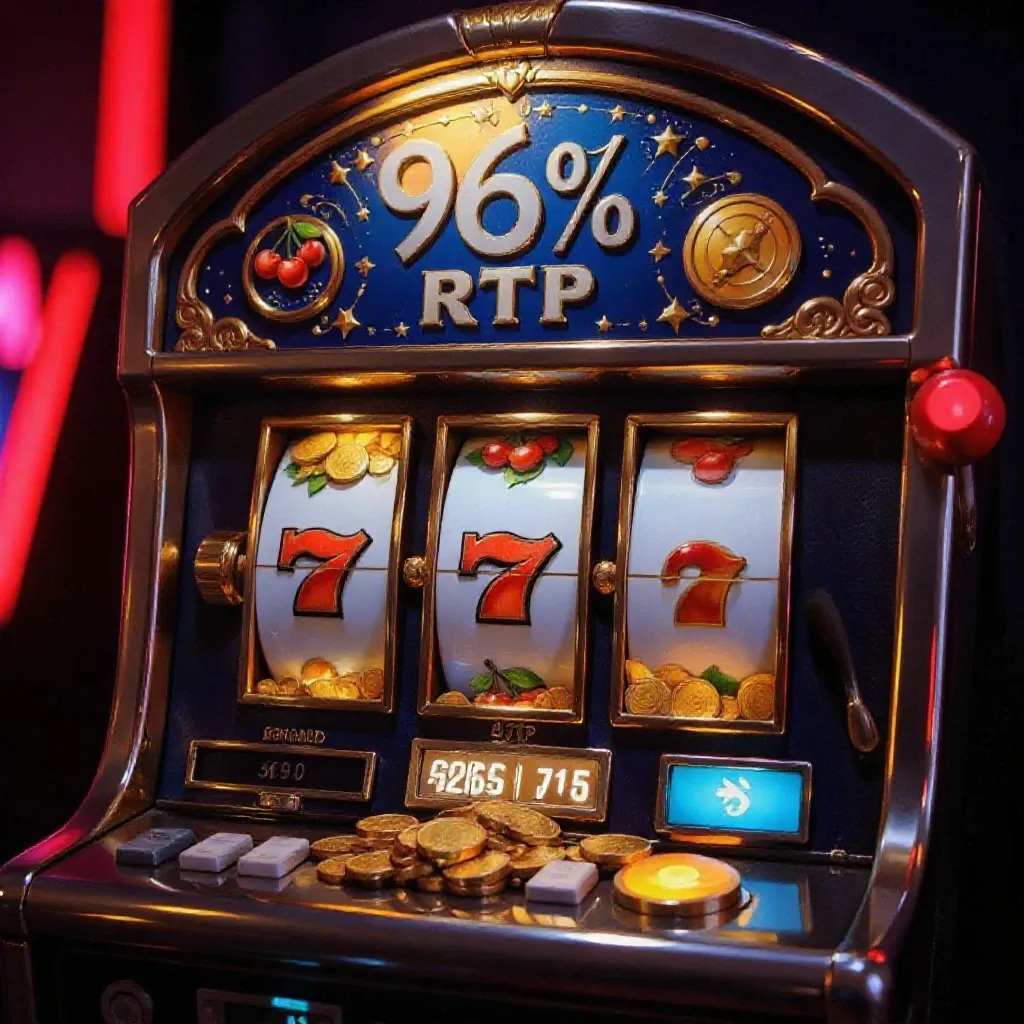
For slot enthusiasts, understanding Return to Player (RTP) is not just about knowing a number; it’s about strategically improving your chances of winning over the long haul. RTP represents the percentage of wagered money a slot machine is programmed to pay back to players over time. Think of it this way: a slot with a 96% RTP theoretically returns $96 for every $100 wagered. While this doesn’t mean you’ll win $96 every time you bet $100, it indicates that, on average, the game is more generous than one with, say, a 92% RTP.
Let’s illustrate this with an example. Imagine you consistently play two different slot games. The first has a 96% RTP, and the second has a 92% RTP. If you wager $1,000 on each game over several sessions, the higher RTP slot is statistically likely to return closer to $960, while the lower RTP slot might only return around $920. That $40 difference can significantly impact your bankroll and playing time. Remember, RTP is a guideline, not a guarantee, but it’s a crucial factor to consider when selecting which slots to play, especially if you’re in it for the long run. Choosing slots with higher RTP can give you a slight edge, increasing your opportunities for those exciting wins.
RTP and Bankroll Management
RTP plays a vital role in smart bankroll management. Understanding a slot’s RTP allows players to make informed decisions about their wager sizes and how long their bankroll might last. A higher RTP suggests that, statistically, your bankroll could stretch further compared to playing slots with a lower RTP. This extended playtime not only increases your entertainment value but can also improve your chances of meeting any wagering requirements attached to bonuses or promotions. By aligning your wager sizes with the RTP of the games you choose, you create a more sustainable and potentially rewarding slot-playing experience.
Volatility and RTP: Understanding the Balance
The intricate dance between Volatility and Return to Player (RTP) is fundamental to understanding slot game mechanics. RTP represents the percentage of wagered money a slot machine is expected to pay back to players over the long term. Volatility, also known as variance, describes the risk level associated with a game. It indicates how frequently and how much a player can expect to win during gameplay. A crucial point to remember is that volatility doesn’t directly dictate the RTP. A game with high volatility can still possess a competitive RTP, suggesting that while wins may be infrequent, they have the potential to be substantial when they do occur. This effect on game increases the probability of high payouts on a game. Conversely, lower volatility games deliver smaller, more frequent wins. Understanding this RTP relation is key to tailoring one’s gaming strategy and bankroll management. Long-term play expose the true nature of the game.
High Variance and Low RTP
High variance slots are not for the faint of heart. These high-risk games can deliver exhilarating wins, but they also come with the potential for significant losses in short order. Navigating these volatile waters requires expert play and a solid understanding of gambling principles. Potential losses are higher to trigger rare, massive payouts. Due to the infrequency of wins, a higher bankroll is generally recommended to weather the losing streaks and capitalize on those rare, high-value hits. Variance on slot can be devastating, especially if the RTP is low.
Low Variance and High RTP
Low variance slots offer a more stable and predictable gaming experience. Wins tend to be more frequent, and the size of payouts is generally smaller. This makes them easier to play, especially for beginners or those with smaller bankrolls. Variance on slot is more forgiving. The inherent nature of these games allows for a more gradual recovery of losses, and bankroll can remain relatively stable over extended play sessions. The high payout creates a safe environment for casuals. These low risk games can be a nice starting point.
Finding RTP Information
Uncovering the Return to Player (RTP) percentage of a slot game is crucial for making informed decisions. Several avenues exist to find this information, empowering players to understand their potential returns.
One of the most reliable methods is to consult the official website of the game developer. Many developers openly publish RTP information for their games, providing a trustworthy source. Supplementing this, numerous slot review sites dedicate themselves to thoroughly analyzing games, often including RTP values in their assessments. These platforms serve as valuable slot RTP databases for players. Be certain to select established and reputable review sites to ensure the information’s accuracy.
While some online casinos formerly provided RTP lists for their slot offerings, this practice has become less prevalent. If available, an online casino RTP list can be a convenient resource. However, always cross-reference the data with other sources to confirm its validity. Exercise caution when encountering unfamiliar or unverified sources, as the accuracy of their information may be questionable. Prioritize verifying any RTP figures you discover to ensure you’re equipped with reliable data.

Using RTP to Make Informed Decisions
Choosing the right slot machine can feel like navigating a maze of flashing lights and enticing sounds. But beneath the surface lies a crucial piece of information that can empower players: the Return to Player (RTP) percentage. Think of RTP as a compass, guiding toward games that, statistically, offer a better chance of returning a portion of wagered money over the long haul.
Making RTP-based decisions is a simple yet effective slot selection strategy. Before spinning those reels, take a moment to compare the RTP of different slots. This is about smart gambling. Many online casinos readily display this information, or it can often be found with a quick online search. A higher RTP suggests a more favorable payout rate over extended play. This is how to optimize slot play. However, consider this information in conjunction with other important factors to set proper expectations of a specific slot.
Volatility, for example, indicates the risk associated with a particular slot. High volatility slots may offer the potential for larger payouts, but they also come with periods of fewer wins. Bonus features can dramatically impact the gameplay experience and winning potential, so these should be weighted as well. Finally, consider your own preferences. Do you prefer frequent small wins, or are you chasing that elusive jackpot?
RTP serves as a tool to inform, not as a crystal ball guaranteeing success. Fortune always plays a role, but understanding and using RTP can significantly influence the slot selection strategy. Start researching the RTP of the slots you play and start making informed, strategic decisions.
Common Misconceptions About RTP
The concept of Return to Player (RTP) often gets tangled in a web of misunderstandings. Many players operate under false assumptions that can lead to frustration and disappointment. It’s time to debunk some of the most pervasive RTP myths and set the record straight.
One of the biggest misconceptions is that RTP guarantees a specific return on every playing session. For instance, if a slot has an RTP of 96%, some players believe they’re entitled to win back $96 for every $100 wagered. This is simply not true. RTP is calculated over millions, even billions, of spins. Short-term results can vary wildly due to the game’s inherent volatility. You might win big, you might lose, but those individual outcomes don’t invalidate the stated RTP.
Another common myth is that high RTP slots always pay out more frequently. While a higher RTP suggests a better statistical chance of winning over the long haul, it doesn’t dictate how often wins will occur. A high RTP slot could still have a high variance, meaning wins are less frequent but potentially larger when they do hit. Conversely, a lower RTP slot might offer more frequent, smaller wins. The RTP is just one piece of the puzzle, not a cheat code for guaranteed wins. Forget about slot machine secrets promising guaranteed outcomes based on RTP – they’re bogus!
Understanding that RTP is a long-term average, not a short-term promise, is crucial for responsible and enjoyable gaming. It’s a tool for comparing different games, not a crystal ball for predicting individual session results.
Conclusion
In summary, understanding the RTP of slot games is not just about knowing the odds; it’s about empowering yourself with knowledge. It’s about approaching the spinning reels with a strategy that goes beyond mere luck. The RTP is a crucial metric that provides insights into the potential returns of a slot game over time.
Smart slot play hinges on informed gambling. By considering the RTP, variance, and your personal preferences, you can make choices that align with your goals and risk tolerance. Remember, a higher RTP doesn’t guarantee immediate wins, but it does suggest a better long-term payout percentage.
Cultivate a winning mindset by continuously learning and adapting your strategies. Knowledge is your most valuable asset in the world of slots. Use it wisely, play strategically, and may your spins be both thrilling and rewarding. Now that you’re armed with this knowledge, consider sharing your experiences and discoveries with fellow players. The more we learn together, the better equipped we all are to navigate the exciting world of slot games.